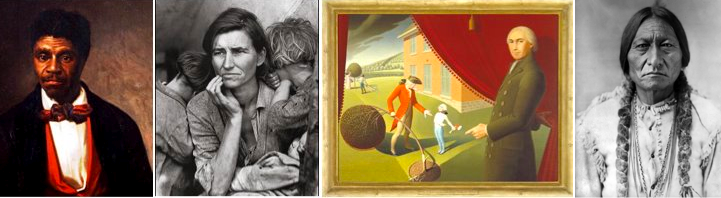
Forcing students to engage with only written words would fall short of my disciplinary objective to help them interpret the world (past and present) as a collage of texts teeming with messages. It will be my job to teach students to think like historians about how stories are pieced together by fragmented voices and conflicting artifacts of experience. While written primary sources offer invaluable details and perspectives, visual representations can say just as much...and maybe more. The difference with visual sources is that students will have to read between unwritten lines. This skill is invaluable to students as they become increasingly reliant upon the internet; thinking like historians will help them develop a more discerning eye as they are inundated with information in the years to come.
I've been reading and reflecting on the difference between teaching history as a process of inquiry instead of teaching it as a process of memorizing and regurgitating names and dates. I am so glad that I'm becoming a history teacher in an era where primary sources are being democratized on the web so students have the resources to think like historians.
Here's my short list of online primary source collections so far:

An excellent post on a very important subject, Jenny. To start at the end, sharing some of what you found on the subject you're addressing is good modeling. Regarding the topic of your post, I think you discuss a really important issue. Of course, it also ties to an issue that is of special concern to us in this class, which has to do with evaluating sources. PBS Teachers has a terrific site that deals with some of these issues from both a Media literacy angle.
ReplyDeleteOne big reason that I love the topic you address is that it has such rich potential to make studying history a more vibrant thing. There are original source documents all around us, right? Your related idea of teaching with images is terrific as well...kids are great observers and "noticers," and working with images can give them terrific opportunities to utilize those skills.
Hi Jenny
ReplyDeleteGreat list of resources! As a former history teacher, I wish I had access to some of these when I was teaching. I would like to add a few of my favorites to your list (we should put a page on our class wiki to house these resources).
http://visual-lit.wikispaces.com/ActivitiesGreat ideas for web activities in learning history.
Image Detective Learn how to become a historical image detective!
National Archives Digital Vault
Jenny,
ReplyDeleteThanks! this is a GREAT list of references. I also like how you included photos in your blog. Nice touch. You have some terrific ideas here. Your presentation today was well done, by the way, Lara